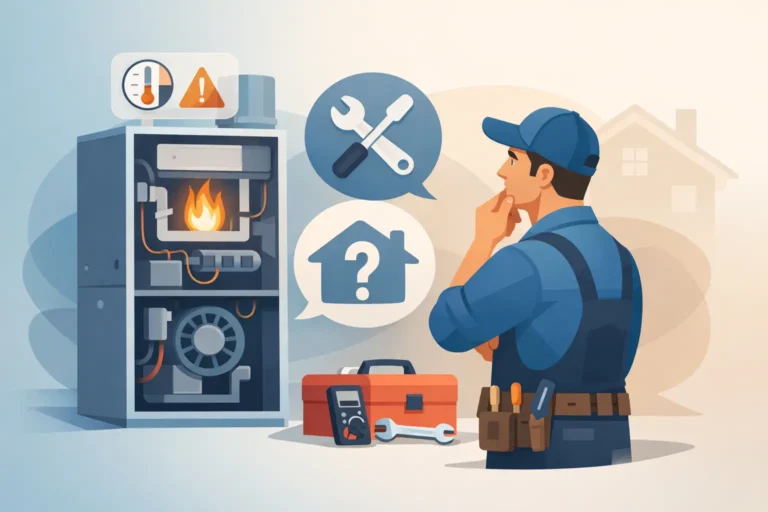

A Florida cold snap has a way of finding every weak point in a heating system. When the thermostat is set to heat but the house stays chilly, furnace repair may be the answer – but the right repair starts with identifying what is actually failing. A tripped safety switch, airflow restriction, electrical issue, or aging component can produce similar symptoms while requiring very different solutions.
For homeowners and property managers, the goal is not simply to get heat back for the night. It is to restore safe, dependable operation without paying for a guess. A thorough diagnosis protects the equipment, helps prevent repeat breakdowns, and gives you a clear explanation of your options.
Signs You May Need Furnace Repair
A furnace does not always stop working all at once. More often, it gives warning signs that become easier to recognize in hindsight. Heat that cycles on and off too quickly, rooms that warm unevenly, unusual noises, or an unexplained jump in energy use all deserve attention.
A system that runs but delivers cool air can be especially frustrating. With a conventional gas furnace, the cause may involve ignition, fuel delivery, flame sensing, venting, or a safety control. With the electric heat found in many Tampa Bay homes, the issue may be a failed heat strip, sequencer, relay, breaker, or wiring connection. A heat pump in heating mode adds another set of possibilities, including a defrost problem, reversing valve issue, or refrigerant-related concern.
Listen for changes as well. Rattling can point to a loose panel or blower assembly. Squealing may indicate a worn belt or motor-related issue on certain equipment. Repeated clicking without ignition should not be ignored. Any burning smell that does not fade shortly after seasonal startup, electrical odor, or visible smoke calls for immediate attention.
For gas equipment, a yellow or wavering burner flame, soot, water around the furnace, or a carbon monoxide alarm are urgent warning signs. Leave the area if you suspect a gas leak or carbon monoxide issue, call emergency services or your gas utility as appropriate, and do not restart the system until it has been inspected.
A Few Safe Checks Before Calling
Some no-heat calls are caused by settings or power interruptions, and a homeowner can safely rule out a few basics. Confirm that the thermostat is set to Heat, the temperature setting is above the current room temperature, and the batteries are fresh if the thermostat uses them. Then check the HVAC breakers. If one has tripped, reset it once. A breaker that trips again should be evaluated by a professional rather than repeatedly reset.
Make sure the air filter is not heavily clogged and that supply and return vents are open and unobstructed. Restricted airflow can cause overheating, reduce comfort, and trigger protective shutdowns. If your system has an outdoor heat pump, remove leaves and debris around the unit, but do not attempt to open electrical panels or thaw a frozen coil with sharp objects or hot water.
Those checks are useful, but they have limits. Do not bypass door switches, safety controls, or diagnostic error codes to force a furnace to run. Those protections exist to prevent equipment damage, fire hazards, and exposure to combustion gases.
Why Professional Furnace Repair Is More Than Replacing a Part
Reliable furnace repair is a diagnostic process. A qualified technician should verify the complaint, inspect the system’s operating sequence, test relevant electrical components, check airflow, and evaluate safety controls before recommending a repair. On gas systems, that can include examining ignition performance, burner operation, venting, and combustion-related safety. On electric systems, it may mean testing heat strips, relays, contactors, breakers, and controls.
This method matters because the failed part is sometimes only the symptom. For example, a repeatedly failed limit switch may be responding to poor airflow from a dirty blower wheel, undersized ductwork, a clogged filter, or closed vents. Replacing the switch alone may restore heat temporarily, but it will not correct the condition that caused the shutdown.
The same thinking applies to a failed blower motor or control board. An experienced technician looks for voltage problems, damaged wiring, moisture, drainage concerns, and overheating that could shorten the life of a replacement component. Homeowners deserve an explanation of what failed, why it likely failed, what the repair involves, and whether there are other conditions worth addressing.
Furnace or Heat Pump? The Difference Matters in Florida
In Pasco County, many homes use heat pumps rather than traditional gas furnaces. A heat pump moves heat from outdoor air into the home, even when outdoor temperatures are cool. During rare colder stretches, electric auxiliary heat strips may turn on to support the system.
Because the symptoms can overlap, calling every heating issue a furnace problem can lead to confusion. A heat pump may run for long periods in cold weather and still be operating normally. It may also produce steam during a defrost cycle, which is often normal. But ice that remains on the outdoor unit, weak indoor airflow, cold air that never improves, or frequent system shutdowns are not situations to wait out.
The best repair path depends on your equipment type, its age, maintenance history, condition, and the cost of the needed repair. A straightforward electrical repair on a well-maintained system can make excellent sense. If an older system has a major component failure, rising repair needs, and poor efficiency, replacement may be worth considering. That is not a one-size-fits-all decision, especially in Florida, where the same system must also carry the demanding cooling load for much of the year.
When Repair May Give Way to Replacement
A repair recommendation should be based on facts, not pressure. Age alone does not automatically mean a system should be replaced. Some equipment performs reliably for years with routine service, clean airflow, and properly sized ductwork. Still, replacement becomes a reasonable conversation when a major repair approaches a meaningful share of the cost of new equipment, parts are becoming difficult to source, or the system has a pattern of breakdowns.
Comfort concerns matter, too. If parts of the home are consistently too warm or too cool, the problem may involve duct leakage, return-air limitations, thermostat placement, insulation, or system sizing. Replacing equipment without evaluating those factors can leave the underlying comfort issue in place.
For light-commercial spaces, downtime and operating costs are often the deciding factors. A repair that keeps a unit dependable through a busy season may be the practical choice. A system with recurring failures that disrupt staff or customers may justify a planned replacement before it becomes an emergency.
Maintenance Helps Prevent Cold-Weather Surprises
Heating problems are often discovered the first time the system is asked to work after months focused on cooling. Preventive maintenance gives a technician the opportunity to inspect electrical connections, test heating operation, confirm airflow, clean key components, and identify worn parts before a cold front arrives.
Regular filter changes are equally important. The correct replacement schedule depends on filter type, household pets, dust levels, renovations, and how often the system runs. A high-efficiency filter can improve particle capture, but a filter that is too restrictive for the system or left unchanged too long can reduce airflow. The right choice balances air quality goals with the equipment’s airflow requirements.
Air Hawk Heating and Cooling LLC approaches heating concerns with the same careful diagnostic process used for year-round comfort: inspect the system, explain the findings plainly, and recommend the repair or next step that fits the equipment and the home.
If your heat is unreliable, do not wait for the next cold night to see whether it improves on its own. A timely inspection can turn an inconvenient warning sign into a manageable repair and help keep your home comfortable when Florida weather changes quickly.