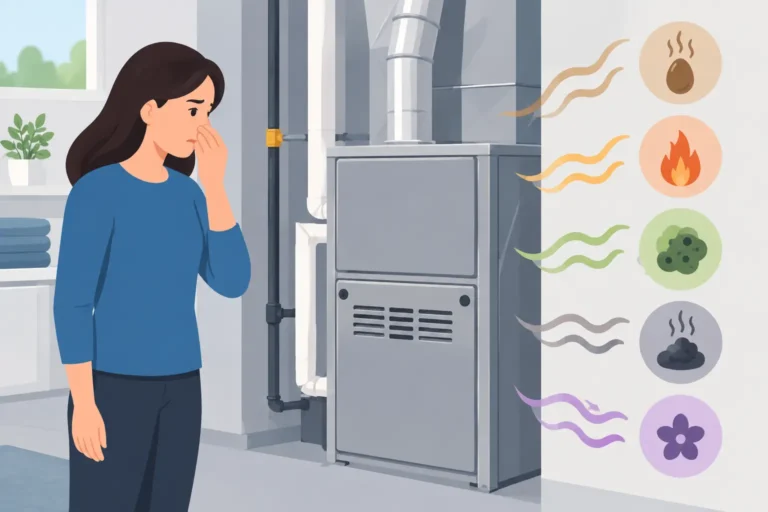

A furnace smell is easy to dismiss when it comes and goes, especially in Florida, where many heating systems sit unused for most of the year. But furnace odor causes range from harmless dust burning off after a long break to electrical faults, fuel leaks, or a ventilation problem that needs immediate attention. The key is not to mask the smell. Notice what it resembles, when it starts, and whether it continues after the first heating cycle.
Furnace Odor Causes: Start With the Type of Smell
Different HVAC odors point technicians in different directions. A brief dusty smell on the first cool morning is not handled the same way as a sulfur-like gas odor or the sharp smell of overheating plastic. Your furnace type also matters. Many Tampa Bay homes use electric air handlers or heat pumps, while others have gas furnaces. The same odor can carry a different level of urgency depending on the equipment in your home.
Dusty or Burning-Dust Smell
The most common first-use smell is dust burning off the heat exchanger, heating elements, or nearby cabinet surfaces. During a long cooling season, dust can settle inside the system. When heat finally runs, that buildup warms up and creates a dry, dusty odor.
This smell should usually fade within one or two heating cycles. Replacing a dirty air filter before turning on the heat can reduce the odor and protect airflow. If the smell remains strong, returns every time the furnace runs, or is accompanied by visible smoke, turn the system off. Excessive dust, a blocked filter, debris in the equipment, or an electrical issue may be involved.
Burning Plastic, Rubber, or Electrical Smell
A sharp chemical smell, melting plastic smell, or odor similar to hot wiring deserves prompt attention. It may indicate overheated electrical components, damaged wire insulation, a failing blower motor, a loose connection, or a belt problem on older equipment.
Do not keep cycling the thermostat to see whether it clears. Turn off the system at the thermostat and, if safe to do so, the HVAC breaker. An HVAC technician should inspect the wiring, motor amperage, capacitors, control board, and electrical connections before the unit is used again. Catching an overheating component early can prevent more extensive damage to the air handler or furnace.
Rotten Egg or Sulfur Smell
If you have a natural-gas furnace and smell rotten eggs or sulfur, treat it as a possible gas leak. Utility companies add an odorant to natural gas because gas itself has little to no smell. Even a faint odor should be taken seriously.
Do not operate light switches, appliances, lighters, or anything that could create a spark. Leave the building, move away from the area, and call your gas utility’s emergency number or 911 from outside. Once the immediate safety issue has been addressed, a qualified HVAC professional can inspect the furnace and gas connections as needed.
A similar odor from an electric system may come from a dead animal, sewer-gas issue, or drain problem near the air handler. It still warrants investigation, but the safe response begins with determining whether natural gas is present in the home.
Musty, Damp, or Dirty-Sock Smell
A musty odor often points to moisture and microbial growth rather than a furnace combustion problem. In humid Pasco County homes, moisture can collect around an evaporator coil, drain pan, condensate line, or ductwork. Because the same indoor equipment may serve heating and cooling, an odor that seems to arrive when the heat starts may actually originate in the air handler or ducts.
A dirty filter, wet insulation, clogged condensate drain, or dirty coil can contribute to the smell. Duct leaks can make matters worse by pulling humid, unconditioned air from an attic, garage, or crawlspace into the system. Cleaning only a vent cover will not solve a moisture source inside the equipment or duct system.
A technician can inspect drainage, airflow, coil condition, duct integrity, and indoor-air-quality options. The right fix depends on the source. Sometimes a thorough cleaning and drain service is enough; in other cases, duct repair, humidity control, or air-treatment equipment may make sense.
Smoke or Burnt-Oil Smell
Smoke is never a normal furnace odor. Shut the system down and call for service. If you see flames, active smoke, or a possible fire, leave the home and call 911.
A burnt-oil smell may occur with an oil-fired furnace, though those systems are less common in this area. It can signal an oil leak, burner issue, or incomplete combustion. Regardless of fuel type, persistent smoke-like odors require a professional inspection before restarting the equipment.
Exhaust, Chemical, or Formaldehyde-Like Smell
A gas furnace that produces an exhaust-like odor may have a venting issue, a cracked heat exchanger, a combustion problem, or a flue connection concern. Carbon monoxide itself has no odor, so never rely on smell to detect it. Working carbon monoxide alarms near sleeping areas and on each level of the home are essential when gas-burning appliances are present.
A chemical or formaldehyde-like smell can also come from recently applied paint, flooring, cleaning products, stored solvents, or new building materials being drawn into the return air. Check whether the odor began after a project or after chemicals were stored near the air handler. Still, if the smell appears only when HVAC equipment operates, professional testing is the practical next step. Airflow can carry odors from places homeowners would not expect.
When a Furnace Smell Is an Emergency
Some smells allow time for a scheduled diagnosis. Others call for an immediate response. Shut the system off, leave the home if needed, and seek emergency help if you notice a gas or rotten-egg odor, smoke, visible sparking, a burning-electrical smell, headaches or nausea paired with combustion concerns, or a carbon monoxide alarm.
For less urgent odors, take a quick note before calling for service. Identify whether the smell occurs in heating, cooling, or fan-only mode; whether it comes from every vent or one room; and whether it started after a filter change, storm, renovation, or long period without use. Those details help narrow the diagnosis and reduce guesswork.
Why Changing the Filter Helps, but Does Not Fix Everything
A clean filter supports proper airflow and can reduce dust-related odors. It is one of the first maintenance items homeowners can safely address. However, a new filter cannot repair a failing blower motor, clean a contaminated coil, seal a leaking duct, correct a gas connection, or resolve a drainage issue.
Avoid using heavy fragrances, sprays, or candles to cover an HVAC odor. They can make it harder to identify a developing problem and may add more particles or chemicals to the indoor air. If the odor is persistent, unusual, or getting stronger, the better choice is a system inspection.
Professional Diagnosis Finds the Source, Not Just the Smell
A thorough furnace service visit should go beyond confirming that the heat turns on. Depending on the system and odor reported, a technician may check electrical components, temperature rise, blower performance, filters, drainage, coils, duct connections, combustion safety, venting, and gas lines. That process matters because odors can travel through return ducts and supply vents far from their actual source.
For homeowners with seasonal-use heating equipment, a preventive tune-up before the first cold front can uncover dust buildup, loose electrical connections, drainage concerns, and worn parts before they become an inconvenient breakdown. Air Hawk Heating and Cooling approaches odor concerns with that same root-cause mindset: clear findings, practical options, and no attempt to sell a repair that does not fit the problem.
If your furnace produces a smell that does not fade quickly or makes you question whether the system is safe, trust that instinct. Turn it off when appropriate, protect your household first, and have the source identified before you rely on the heat again.