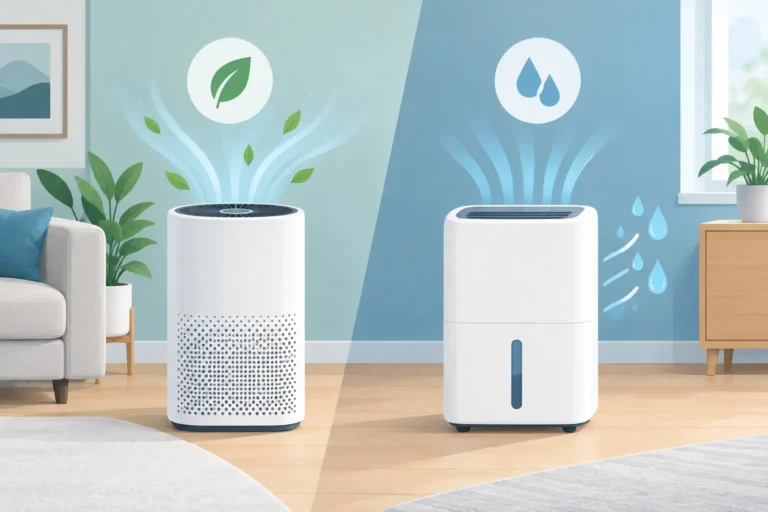

A sticky home can feel unhealthy even when the thermostat says 74 degrees. Yet musty odors, visible dust, allergy symptoms, and clammy rooms do not all have the same cause. When comparing an air purifier versus dehumidifier, the right choice depends on what is actually affecting your indoor air: airborne particles, excess moisture, or a combination of both.
For homeowners across the Tampa Bay area, humidity is often part of the equation. Florida air conditioning systems remove some moisture as they cool, but an oversized system, duct leak, drainage issue, or long stretch of rainy weather can leave indoor humidity higher than it should be. A portable appliance may help in a single room, but persistent comfort or moisture problems deserve a closer look at the home’s HVAC system.
Air Purifier Versus Dehumidifier: The Core Difference
An air purifier cleans the air by capturing or treating contaminants that move through it. Depending on the equipment, that can include dust, pollen, pet dander, smoke particles, and other airborne irritants. A dehumidifier removes water vapor from the air. Its purpose is to lower relative humidity, which can reduce that damp, clammy feeling and make conditions less favorable for mold and dust mites.
Neither appliance performs the other’s primary job. An air purifier does not dry out a humid room. A dehumidifier does not filter pollen, pet dander, or fine airborne particles. That distinction matters because buying the wrong equipment can leave the underlying problem untouched.
| If your main concern is… | The better starting point is… | |—|—| | Dust, pollen, pet dander, smoke, or allergy triggers | Air purifier | | Condensation, musty odors, damp closets, or clammy rooms | Dehumidifier | | Mold concerns caused by high indoor moisture | Dehumidifier, plus source correction | | Both odors/allergens and elevated humidity | Both, after an HVAC assessment |
What an Air Purifier Can and Cannot Do
Air purifiers are most useful when the problem is suspended in the air. A properly sized unit with effective filtration can reduce the amount of airborne particulate matter circulating in a bedroom, living room, office, or other occupied space. This can be especially helpful during high-pollen periods, after indoor projects that create dust, or in homes with pets.
The filter type and equipment size matter. A small tabletop purifier may make a noticeable difference near a desk or bed, but it will not clean the air throughout a large open floor plan. Similarly, a filter that is not changed on schedule cannot provide its intended performance. The same principle applies to your HVAC filter: airflow and filtration need to be balanced so the system can protect indoor air without straining the equipment.
Whole-home solutions can be a better fit when concerns affect several rooms or when family members are sensitive to airborne contaminants. Installed within the HVAC system, whole-home air cleaners and certain UV solutions can work alongside normal heating and cooling operation. The best setup depends on the home, the existing equipment, and the specific issue being addressed.
An air purifier does have limits. It cannot remove moisture, repair a leaking duct, stop a roof or plumbing leak, or eliminate mold growing on a surface. If a purifier is masking a musty smell rather than solving it, the moisture source still needs attention.
When a Dehumidifier Is the Better Answer
A dehumidifier is designed for moisture control. Most homes are generally most comfortable when indoor relative humidity stays around 30% to 50%. In a Florida home, maintaining that range can be difficult when the AC is not running long enough, outdoor humid air enters through leaks, or moisture is coming from a crawl space, bathroom, laundry area, or plumbing issue.
Signs that humidity may be the bigger problem include windows that sweat, towels that take too long to dry, a persistent musty odor, peeling paint, mildew in closets, and rooms that feel sticky despite adequate cooling. Some people also notice that their home feels warmer than the thermostat setting. High humidity slows the body’s natural ability to cool itself through perspiration, so 75 degrees can feel far less comfortable than it should.
Portable dehumidifiers can work well for a contained area such as a laundry room, bedroom, garage, or enclosed office. They need to be sized for the space and emptied or drained correctly. A full reservoir stops moisture removal, and a poorly maintained unit can develop its own odor problems.
For widespread moisture concerns, a whole-home dehumidifier may be more practical. It works with the HVAC system to control humidity across the home without relying on multiple portable units. It can be particularly valuable in homes where occupants want to keep the thermostat at a reasonable setting without sacrificing comfort.
High Humidity Is Sometimes an HVAC Warning Sign
Before adding a dehumidifier, consider whether the air conditioner is doing its job. During normal cooling, an AC system pulls heat and moisture from indoor air. If humidity remains consistently high, the cause may be more than Florida weather.
An oversized air conditioner is one common issue. It cools the house quickly and shuts off before running long enough to remove adequate moisture. Dirty coils, incorrect refrigerant charge, airflow restrictions, duct leakage, thermostat problems, and improperly configured equipment can also affect humidity control. In some homes, outside air may be entering through gaps in ductwork or building openings faster than the system can manage it.
This is why a technician should diagnose recurring humidity issues instead of simply recommending the largest dehumidifier available. The right fix might be equipment adjustment, duct repair, improved ventilation, a whole-home dehumidifier, or a combination of solutions. Correcting the source protects comfort, energy efficiency, and the long-term condition of the home.
Can You Use Both Together?
Yes. In fact, an air purifier and dehumidifier often address different parts of the same indoor-air concern. Lower humidity can help limit mold growth and dust mites, while air purification can reduce the particles that remain airborne. Homes with pets, allergies, recurring musty odors, or occupants with respiratory sensitivities may benefit from both forms of control.
The key is setting realistic expectations. A dehumidifier may reduce the conditions that support mold, but it will not remove existing mold from walls, furniture, or ductwork. An air purifier may capture airborne particles, but it cannot solve moisture intrusion. If mold is suspected, the source of water or humidity should be identified and corrected before relying on air treatment equipment.
For small businesses, the same logic applies. A stuffy office, lobby, salon, or retail space may need better filtration for occupant comfort, but a persistent damp smell points to a moisture issue that should be investigated. Treating symptoms without finding the cause can lead to repeat complaints and unnecessary operating costs.
How to Make the Right Choice for Your Home
Start by identifying the pattern. If symptoms worsen when dust is visible, pets are indoors, or pollen counts are high, an air purifier or upgraded HVAC filtration may be the better direction. If the problem is strongest after rain, in closed rooms, or when the home feels cool but sticky, humidity control should move to the top of the list.
A basic hygrometer can provide useful information by showing indoor relative humidity. Take readings in more than one area, especially bedrooms, bathrooms, closets, and rooms with exterior walls. If humidity regularly stays above 50% to 55%, or if you see condensation and mildew, it is worth having the HVAC system and home moisture conditions evaluated.
Air Hawk Heating and Cooling can assess how your system is cooling, draining, filtering, and moving air before recommending a whole-home air-quality solution. A careful evaluation helps separate a one-room appliance need from a larger issue involving equipment sizing, ducts, airflow, or moisture control.
Cleaner air and drier air are both worthwhile goals, but they are not interchangeable. When your home feels uncomfortable or smells off, choosing the right solution begins with finding out what the air is actually telling you.