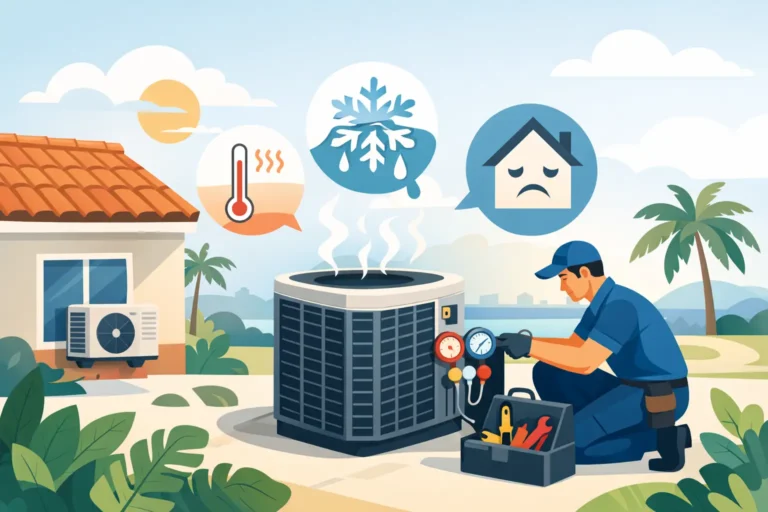

A Florida air conditioner rarely fails at a convenient time. It usually starts during a long stretch of 90-degree weather, when the house feels sticky, the system runs nonstop, and the temperature on the thermostat keeps climbing. Fast, professional ac repair can restore comfort, but it can also prevent a smaller problem from becoming a compressor failure, water-damage issue, or premature system replacement.
For homeowners and small businesses in Odessa, Trinity, East Lake, Tarpon Springs, Keystone, Land O’ Lakes, Lutz, and nearby Tampa Bay communities, the goal should be more than getting cool air back for the afternoon. A proper repair identifies why the equipment struggled in the first place and gives you a clear, honest picture of what comes next.
When AC Repair Cannot Wait
Some air conditioning issues deserve prompt attention, especially during Florida heat and humidity. If your system is blowing warm air, repeatedly turning on and off, or unable to hold the temperature you set, it is working harder than it should. Continuing to run it can place added strain on the compressor and electrical components.
Water around the indoor air handler is another concern. A clogged condensate drain, damaged drain pan, frozen evaporator coil, or drain-line issue can allow water to overflow into ceilings, walls, or flooring. Turning the system off may limit further damage until a technician can inspect it.
Pay attention to unusual sounds as well. Grinding, screeching, banging, or persistent buzzing can point to a failing motor, worn bearing, loose component, electrical problem, or compressor issue. A brief sound when a system starts can be normal, but new or repeated noises should not be ignored.
A burning odor, a tripped breaker, or signs of electrical arcing require immediate caution. Do not keep resetting a breaker to force the air conditioner to run. The breaker is doing its job by responding to an abnormal electrical load, and the source needs to be diagnosed safely.
The Common Reasons Florida AC Systems Lose Performance
Air conditioning equipment in Pasco County has a demanding job. It must cool the home while removing large amounts of moisture from the air. When any part of that process is interrupted, comfort can decline quickly.
A dirty air filter is one of the simplest causes of reduced airflow, but it can have outsized effects. Restricted airflow can make rooms feel uneven, cause the evaporator coil to freeze, and force the blower system to work harder. Checking the filter regularly is practical homeowner maintenance, but a filter change alone will not solve every airflow problem. Duct leaks, undersized return ducts, blower issues, and a dirty indoor coil can produce similar symptoms.
Refrigerant problems are another frequent cause of poor cooling. Refrigerant does not get used up under normal operation. If the level is low, there may be a leak that needs to be found and repaired. Simply adding refrigerant without identifying the leak can offer short-term relief while allowing the underlying issue to continue.
A frozen coil may look like an ice-related problem, but ice is usually a symptom. Low airflow, a dirty coil, refrigerant leaks, and blower malfunctions can all cause the coil temperature to drop below freezing. Running the system while it is frozen can worsen the situation. Turn the cooling setting off, allow the ice to melt, and arrange for a qualified inspection rather than chipping at the ice or assuming the issue will correct itself.
Thermostat and electrical controls can also be the source of trouble. A thermostat that is miscalibrated, improperly programmed, or losing power may prevent the system from operating correctly. In other cases, the thermostat is only reporting a larger issue with the air handler, outdoor unit, safety switch, capacitor, or control board.
What a Thorough AC Repair Visit Should Include
Good diagnosis begins with listening. The details you notice matter: whether the problem happens only in the afternoon, whether one room stays warmer than the rest, whether the system has leaked water, or whether your electric bill changed suddenly. Those observations help narrow the investigation.
A technician should then inspect the system as a whole instead of replacing a part based on one symptom. That process may include checking thermostat operation, electrical connections, capacitors, contactors, airflow, filter condition, blower performance, coil condition, drain components, refrigerant readings, and outdoor-unit operation. The exact tests depend on the equipment and the problem, but the purpose stays the same: find the root cause before recommending a repair.
Clear communication matters just as much. You should understand what failed, why it likely failed, what the repair involves, and whether other conditions could affect reliability. An experienced HVAC contractor will explain the options in plain language and provide transparent pricing before moving forward whenever possible.
At Air Hawk Heating and Cooling LLC, that approach means treating a repair call as a comfort problem to solve, not simply a part to sell. A dependable solution may be straightforward, such as clearing a drain blockage or replacing a failed capacitor. Other times, the right recommendation may involve correcting an airflow problem, repairing ductwork, or discussing whether an aging system is still a sensible investment.
Repair or Replace? The Answer Depends on the System
A repair is often the right choice when the equipment is relatively new, has been maintained, and the issue is isolated. Many common problems, including failed capacitors, contactors, drain components, thermostats, and blower parts, can be repaired without replacing the entire system.
Replacement becomes worth discussing when repairs are becoming frequent, the compressor or coil has failed, efficiency has dropped substantially, or the system is nearing the later part of its expected service life. Age alone should not dictate the decision. A well-maintained unit may have useful life left, while a newer system with repeated major failures may warrant a closer look.
The cost comparison should include more than the immediate repair bill. Consider expected future repairs, energy use, warranty coverage, indoor comfort, humidity control, and the condition of connected equipment such as the air handler and ductwork. In Florida, a correctly sized, properly installed high-efficiency system can improve more than temperature control. It can also provide steadier humidity removal and more consistent comfort from room to room.
How to Reduce Surprise Breakdowns
Preventive maintenance cannot guarantee that a part will never fail, but it gives technicians a chance to catch developing concerns before peak summer demand. A professional tune-up typically reviews safety controls, electrical components, drainage, coils, airflow, and overall performance. It is also an opportunity to address dirt buildup and minor wear that can reduce efficiency.
Between service visits, keep the outdoor unit clear of leaves, grass clippings, and stored items. Replace filters on the schedule appropriate for your household, pets, allergies, and filter type. Keep supply vents and return grilles open and unobstructed. If you notice water, weak airflow, ice, odors, or a change in operating sound, schedule service early instead of waiting for a complete shutdown.
For small businesses and rental-property owners, maintenance is especially valuable because a cooling failure can disrupt customers, tenants, employees, and daily operations. Planning service before the hottest months often offers more flexibility than responding after equipment has already stopped working.
Comfort Starts With a Clear Next Step
When your air conditioner is not keeping up, avoid guessing at the cause or settling for a quick fix that leaves the underlying problem untouched. Make note of the symptoms, turn the system off if there is water, ice, burning odor, or electrical trouble, and arrange a professional evaluation. A careful diagnosis today can protect your comfort through the next Florida heat wave.