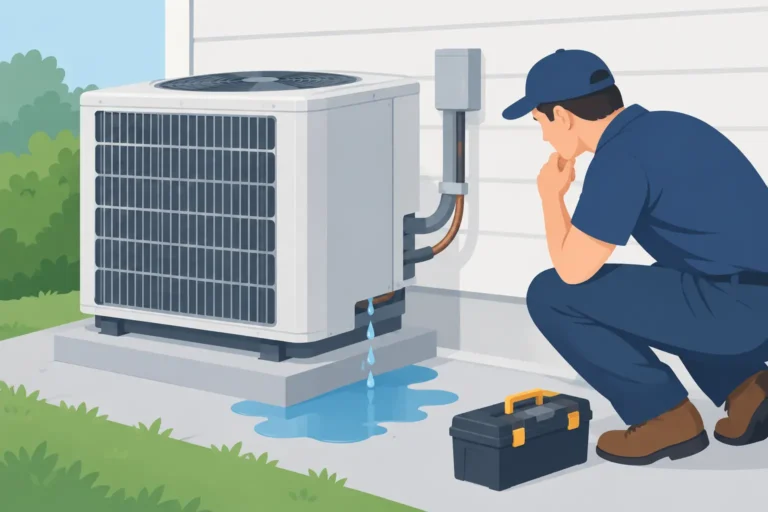

A puddle near your indoor unit is easy to dismiss until Florida humidity, a backed-up drain, or a frozen coil turns it into water damage. If you are asking, “why is my HVAC leaking,” the first step is identifying what is leaking and where it is coming from. Most visible HVAC leaks are water from the air conditioner’s condensation system, but refrigerant leaks, duct sweating, and plumbing problems can look similar at first.
A little water around the outdoor unit during a cooling cycle can be normal. Water pooling under an indoor air handler, dripping through a ceiling, or appearing around a closet unit is not. Acting early can protect your home, restore cooling, and prevent a small maintenance issue from becoming an expensive repair.
Why Is My HVAC Leaking Water?
Your air conditioner does more than cool the air. As warm, humid indoor air passes across the cold evaporator coil, moisture condenses on the coil. That water should collect in a drain pan and travel through a condensate drain line to the outside of your home or a plumbing connection.
In Pasco County and throughout the Tampa Bay area, air conditioners remove a substantial amount of moisture during much of the year. That makes the condensate system one of the most common sources of an HVAC water leak. When any part of that path is blocked, cracked, disconnected, or overwhelmed, water can escape where it should not.
A clogged condensate drain line
A clogged drain line is the leading cause of water around an indoor AC unit. Algae, mildew, dust, and debris can build up inside the line over time. Water then backs up into the drain pan and eventually overflows.
You may notice slow draining, a musty smell near the air handler, water beneath the unit, or a system that shuts off unexpectedly. Many systems have a float safety switch designed to stop operation when water rises too high. That interruption is frustrating, but it can prevent a ceiling leak or damaged flooring.
Clearing a drain line requires more than simply forcing water through it. A technician should verify the blockage is fully removed, inspect the trap and line slope, and confirm the drain is flowing correctly after service. Repeated clogs may point to an installation issue or a need for more consistent maintenance.
A damaged or rusted drain pan
The primary drain pan sits beneath the evaporator coil, where it catches condensation. Older metal pans can rust through, while plastic pans can crack. In attic installations, many systems also have a secondary emergency pan underneath the unit. If that secondary pan holds water, it is a warning that the primary drainage path has failed.
A pan may need repair or replacement, but the cause of the overflow still needs attention. Replacing a pan without correcting a blocked line, frozen coil, or improper unit leveling can leave you with the same leak again.
A frozen evaporator coil
Ice on the indoor coil eventually melts. When it does, the volume of water can exceed what the drain pan and line can handle, producing a sudden leak around the air handler. A frozen coil is not the root problem. It is a symptom that airflow or refrigerant performance needs to be checked.
A severely clogged air filter, blocked return vent, dirty evaporator coil, failing blower motor, or closed supply vents can restrict airflow enough to freeze the coil. Low refrigerant can also cause freezing. Turning the system back on after the ice melts may bring temporary cooling, but it does not correct the issue that caused the freeze.
If you see ice on refrigerant lines or the indoor coil, turn the cooling system off at the thermostat. Leave the fan setting on if appropriate for your equipment, replace a visibly dirty filter, and allow the ice to thaw. Then schedule a professional diagnosis before running the AC again.
A failed condensate pump
Some air handlers cannot drain by gravity because of where they are installed. These systems use a small condensate pump to move water to a drain location. If the pump loses power, becomes clogged, or fails mechanically, the reservoir can overflow.
A humming sound without drainage, water near the pump, or a system that repeatedly trips its float switch may signal a pump problem. Because the pump, drain, and safety switch work together, a full inspection is more reliable than replacing the pump based on appearance alone.
Is It Water, Refrigerant, or Duct Condensation?
Not every HVAC leak is a drain problem. The distinction matters because the right response is different.
Refrigerant is not typically seen as a clear puddle of liquid under your unit. It often escapes as a gas through a small opening in a coil or line, sometimes leaving oily residue near the leak. Warning signs can include weak cooling, longer run times, ice on the refrigerant line, hissing sounds, and rising electric bills. Refrigerant is not something to top off without finding the leak. A proper repair involves locating the source, assessing the condition of the system, making the appropriate repair, and charging the equipment to manufacturer specifications.
In humid weather, uninsulated or poorly insulated ductwork can sweat. Condensation on ducts may drip in an attic, garage, or utility space and resemble a plumbing leak. Torn duct insulation, air leaks at connections, and excessive indoor humidity can all contribute. Duct repair or sealing may be part of the lasting solution.
A leak near the HVAC system can also come from a roof, water heater, plumbing line, or appliance drain. That is why a technician should trace the water source instead of assuming the air conditioner is at fault.
What You Can Do Before Service Arrives
Start by protecting the area around the leak. Move rugs, boxes, electronics, and furniture away from the water. If water is actively overflowing from the indoor unit or dripping from a ceiling, turn the cooling system off at the thermostat to prevent additional condensation. If water is close to electrical components, avoid touching the equipment and turn off power at the breaker only if you can do so safely.
Check the air filter. If it is heavily coated with dust, replace it with the correct size and type for your system. Do not use a high-restriction filter simply because it sounds more effective. The best filter depends on your equipment, duct design, indoor-air-quality needs, and the manufacturer’s airflow requirements.
You can also look outside for the condensate drain outlet. A normally operating system may drip water there while cooling. If the indoor unit is leaking but the outside drain is completely dry, a blockage is possible. Avoid using harsh chemicals, compressed air, or makeshift tools in the line. These methods can damage fittings, push a clog deeper, or create a leak behind a wall.
Do not attempt to handle refrigerant, open sealed components, or keep restarting a system with a frozen coil. Those situations call for trained HVAC service.
When an HVAC Leak Needs Prompt Professional Attention
Schedule service promptly if you have recurring water around the indoor unit, visible rust or cracks in a drain pan, a tripped float switch, ice on the coil or lines, poor cooling, or water stains on ceilings and walls. A water leak in an attic-mounted air handler deserves particular urgency because the damage may spread before it is visible inside the living space.
For small businesses and property owners, an HVAC leak can also disrupt operations, damage inventory, and create slip hazards. Fast diagnosis helps protect the property while avoiding unnecessary downtime.
A thorough service visit should include checking drainage, the evaporator coil, airflow, refrigerant performance when indicated, duct condition, system leveling, and the safety controls that protect against overflow. Air Hawk Heating and Cooling approaches leaks this way because a cleared line is only a temporary fix if another system problem is causing it to back up.
Preventing the Next Leak
Regular maintenance is the most practical way to reduce condensate problems. During a professional tune-up, the drain system can be cleaned and tested, the filter and airflow can be evaluated, and early signs of coil, pump, or refrigerant issues can be addressed before they cause water damage.
Homeowners can help by changing filters on schedule, keeping return vents clear, watching for changes in cooling performance, and paying attention to unusual sounds or moisture near the equipment. In Florida’s long cooling season, these small checks matter.
Water near your HVAC system is a signal to investigate, not a mess to repeatedly mop up. A clear diagnosis protects your comfort, your equipment, and the parts of your home that should never have to share space with a leaking air conditioner.