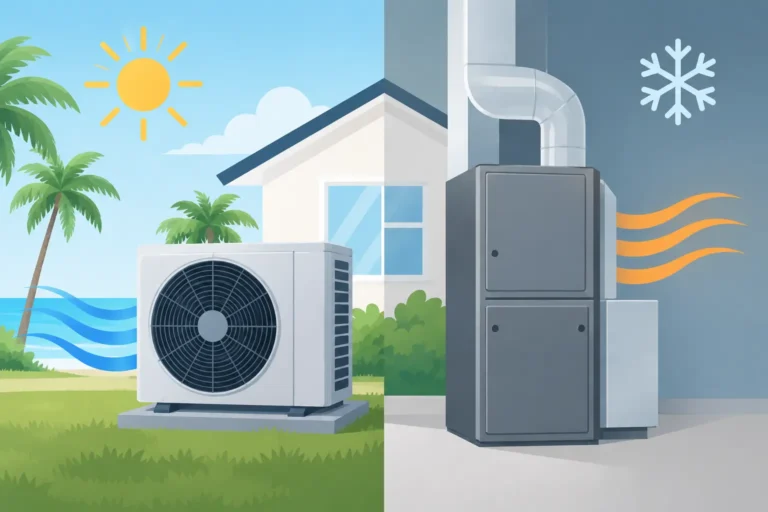

A heating system can feel like an afterthought in Tampa Bay – right up until a January cold front makes the house uncomfortable overnight. For most local homeowners, the heat pump versus furnace decision is not really about surviving months of deep winter. It is about choosing equipment that supports dependable cooling, efficient heating, humidity control, and manageable operating costs throughout the year.
Both systems can provide reliable heat when properly sized and installed. But they work very differently, and Florida’s climate gives heat pumps a meaningful advantage in many homes. The right answer still depends on your current equipment, utility setup, ductwork, budget, comfort preferences, and the condition of the rest of your HVAC system.
Heat Pump Versus Furnace: The Core Difference
A furnace creates heat. Gas furnaces burn natural gas, while electric furnaces use electric resistance heating elements. The warm air then moves through your duct system and into the home.
A heat pump does not create heat in the same way. It transfers heat. During cooling season, it pulls heat from inside the home and releases it outdoors, just like a central air conditioner. When heating is needed, the system reverses that process and draws available heat from outdoor air to bring indoors.
That reversal is why a heat pump can serve as both the heating system and the air conditioner. In a warm climate such as Pasco County, where cooling is the dominant demand, having one high-efficiency system handle both jobs is often practical and cost-effective.
Why Heat Pumps Usually Make Sense in Florida
Modern heat pumps perform very well in mild-to-warm winter weather. Even when it feels chilly outside, the air still contains heat that the equipment can move indoors. Because the system is transferring heat rather than generating it through combustion or resistance coils, it can use less electricity than conventional electric heat.
For homeowners replacing an aging AC system and electric air handler, a heat pump is often a natural upgrade. The outdoor unit provides cooling during long Florida summers and efficient heating during our shorter cool periods. There is no need for a separate furnace in the usual central heat pump configuration.
Heat pumps can also provide a more even type of heating. Instead of very hot air delivered in short cycles, they may run longer at lower output, especially variable-speed models. That can reduce temperature swings from room to room when the system has been selected and commissioned correctly.
The trade-off is that heat-pump performance changes as outdoor temperatures fall. During rare cold snaps, the system may rely on auxiliary electric heat to maintain indoor comfort. Auxiliary heat is effective, but it costs more to operate than normal heat-pump heating. A properly designed system accounts for this rather than treating backup heat as a failure.
When a Furnace May Be the Better Choice
A furnace may be a sensible option for a home that already has natural gas service, compatible ductwork, and a homeowner who prefers gas heat. Gas furnaces deliver high supply-air temperatures quickly, which some people find especially comforting on cold mornings.
In climates with long, severe winters, furnaces often have a stronger case because gas heat remains dependable in extreme cold. That is not the daily reality in Odessa, Land O’ Lakes, Trinity, or most surrounding communities. Still, a furnace can be appropriate when replacing a failed gas furnace while retaining a separate central air conditioner, or when a property’s existing fuel and equipment arrangement makes that path more economical.
Homeowners should also understand that a furnace alone does not cool the home. A complete furnace-and-AC setup includes a separate outdoor air conditioning unit, indoor evaporator coil, and furnace blower. When comparing estimates, make sure you are comparing complete systems with similar efficiency ratings, warranties, electrical or gas work, and installation scope.
Energy Costs Depend on More Than the Equipment
It is tempting to compare one efficiency number and declare a winner. Real operating cost is more complicated. A heat pump’s heating efficiency is commonly measured by HSPF2, while furnaces use AFUE ratings. Higher ratings can help, but they do not tell the full story.
Your electric rate, natural gas availability and pricing, thermostat habits, insulation levels, duct leakage, and system sizing all affect what you pay. In Florida, cooling consumption often outweighs heating consumption by a wide margin. That means the cooling efficiency of a heat pump or AC system – measured by SEER2 – deserves as much attention as the heating side.
A high-efficiency system cannot overcome badly leaking ducts in a hot attic or insufficient return airflow. It may run longer, struggle to control humidity, and wear prematurely. Before selecting replacement equipment, a thorough contractor should evaluate the home, not just match the size of the old unit.
Proper Sizing Protects Comfort and Equipment Life
An oversized system is not automatically better. It can cool the home too quickly, leading to short cycling and less effective humidity removal. An undersized system may run continuously during peak heat, leaving indoor temperatures and utility bills higher than expected.
A professional load calculation considers square footage, ceiling height, insulation, windows, orientation, occupancy, duct design, and other home-specific details. This is particularly valuable after renovations, window replacements, added insulation, or a garage conversion. The equipment that worked 15 years ago may not be the right size today.
Comfort, Humidity, and Indoor Air Quality
For Florida households, comfort is not just a thermostat number. Humidity has a major effect on how a home feels. A well-matched heat pump with variable-speed equipment can run at lower capacity for longer periods, helping remove moisture while maintaining steadier temperatures.
That does not mean every home needs the most advanced system available. A dependable single-stage heat pump can be an excellent solution when it is properly sized and installed. The goal is to match the equipment to the home and the family’s priorities, whether that means lower upfront cost, quieter operation, better humidity management, or premium efficiency.
Furnace-based systems can also provide excellent summer comfort when paired with the right air conditioner. The cooling performance depends primarily on the AC equipment, airflow, refrigerant charge, thermostat setup, and duct condition. If indoor humidity remains high, the cause may be an oversized unit, duct issue, drainage problem, or a system that needs service – not simply the fact that the home uses a furnace.
Installation Details Matter More Than Most Homeowners Expect
The best equipment can disappoint when installation is rushed. Refrigerant piping must be sized and protected correctly. Electrical connections, condensate drainage, airflow, thermostat controls, and duct transitions all need careful attention. For furnaces, combustion venting and gas connections require an additional level of safety-focused workmanship.
A replacement estimate should clearly identify what is included. Ask whether the contractor will inspect ductwork, verify airflow, address drainage, install a new thermostat if needed, register applicable warranties, and test the system after installation. Transparent answers make it easier to compare proposals fairly.
At Air Hawk Heating and Cooling, the recommendation should begin with the condition of your home and existing system, not a one-size-fits-all sales pitch. A family that wants a practical replacement may need a different solution than a homeowner focused on high-efficiency comfort or a light-commercial property trying to control operating costs.
Maintenance Requirements for Each System
Heat pumps and furnace systems both need regular professional maintenance. In Florida, heat pumps work nearly year-round, so their outdoor coils, electrical components, refrigerant performance, condensate system, and airflow deserve consistent attention. Changing filters on schedule is one of the simplest ways to protect comfort and equipment life.
A gas furnace should receive annual safety checks that include burner operation, ignition, venting, heat exchanger condition, and gas connections. Its companion AC unit also needs routine cooling maintenance. Electric furnaces need inspection as well, particularly for heating elements, wiring, and blower performance.
For either option, maintenance is less expensive and less disruptive than waiting for an outage. It also gives a technician a chance to spot worn components, restricted airflow, drain issues, and duct concerns before they become a no-cool or no-heat call.
Making the Right Choice for Your Home
For many Florida homeowners, a heat pump is the better all-around fit because it delivers both efficient cooling and economical heating in one system. A furnace can still be a sound choice where natural gas is already in place, a homeowner prefers gas heat, or the existing system design supports a straightforward furnace-and-AC replacement.
The useful question is not which system wins in every house. It is which option will keep your home comfortable, control humidity, fit your budget, and remain serviceable for years to come. Start with a careful evaluation of the equipment, ducts, insulation, and comfort problems you have now. A clear diagnosis makes the next decision much easier.