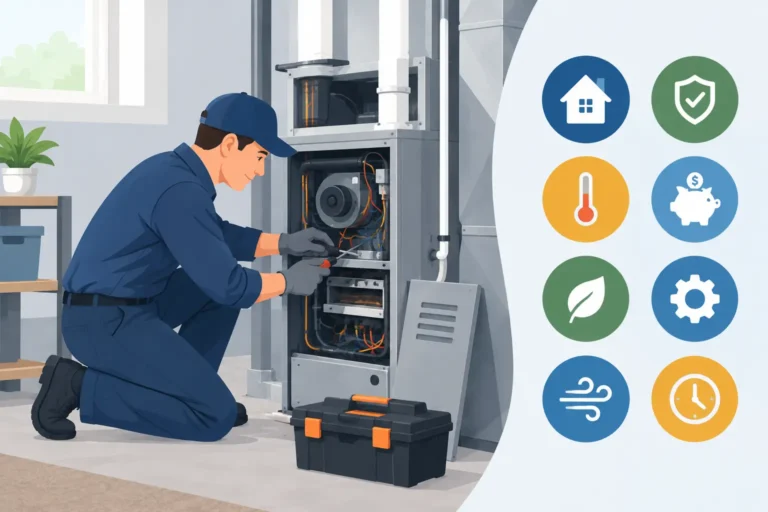

A furnace rarely chooses a convenient time to fail. It may run normally through a mild Florida winter, then stop producing heat during the first cold snap or begin cycling on and off when your household needs dependable comfort. The benefits of furnace maintenance come from catching the small issues behind those failures before they turn into an urgent repair, a safety concern, or an unexpected replacement decision.
For homeowners and property managers, maintenance is not simply a quick filter change. A professional visit gives a trained technician the opportunity to inspect the system’s mechanical, electrical, airflow, and safety components as one connected system. That thorough approach helps protect comfort, operating costs, and the equipment you already own.
1. Furnace Maintenance Helps Prevent Unexpected Breakdowns
Most furnace breakdowns do not happen without warning. A worn igniter may take longer to light. A blower motor may start making noise. A dirty filter or restricted return can cause overheating and trigger the high-limit switch. Left alone, those conditions can lead to a no-heat call when temperatures drop.
During routine maintenance, a technician can identify loose electrical connections, aging capacitors, damaged wiring, dirty burners, and parts that are beginning to wear. Not every finding requires an immediate repair, and a trustworthy contractor should explain the condition of the part, the likely consequences of waiting, and the available options. That allows you to plan instead of reacting under pressure.
For light-commercial properties, preventive service can be especially valuable. A furnace issue in an office, shop, or rental property can affect employees, customers, tenants, and daily operations. Scheduling service before the heating season reduces the chance of an interruption at the worst possible time.
2. A Clean, Tuned Furnace Uses Less Energy
A furnace must move air efficiently and burn fuel or use electricity properly to deliver heat without wasting energy. When airflow is restricted by a clogged filter, dirty blower wheel, blocked vent, or duct issue, the system works harder to move conditioned air through the home. That added strain can raise utility costs and shorten the life of components.
Maintenance addresses the conditions that make a furnace labor unnecessarily. Depending on the equipment, service may include checking airflow, inspecting the blower assembly, verifying thermostat operation, examining the filter, and confirming the system is heating within its expected operating range. Technicians also look for duct leaks or insulation gaps that allow heated air to escape before it reaches occupied rooms.
The savings vary. A newer, properly installed furnace with a clean filter may see a smaller change than an older system that has been neglected for several seasons. Still, efficient operation matters because heating costs are not limited to one cold day. Small losses add up over the life of the equipment.
3. Safety Checks Protect Your Household
Safety is one of the most meaningful benefits of furnace maintenance, particularly for gas furnaces. A gas system produces heat through combustion, so it needs proper ignition, ventilation, and venting to operate safely. Cracked heat exchangers, burner problems, venting concerns, and failed safety controls should be evaluated by a qualified HVAC professional rather than treated as a do-it-yourself fix.
During a maintenance visit, the technician can inspect the burners, flame pattern, ignition system, gas connections, flue components, and safety switches. If a concern is found, the right response depends on its severity. Some issues may be repairable; others may require the furnace to be shut down until a safe repair or replacement is completed.
Every home with fuel-burning equipment should also have working carbon monoxide detectors in appropriate locations. A detector is not a substitute for professional maintenance, but it is an essential layer of protection. If a carbon monoxide alarm sounds or anyone experiences symptoms such as dizziness, headache, nausea, or confusion, leave the building and seek emergency assistance.
4. Maintenance Can Extend Furnace Life
A furnace is a major home system, and replacing it is a decision most owners want to make on their terms. Regular service cannot make equipment last forever, but it can reduce the avoidable wear that shortens its useful life.
Overheating from low airflow, repeated short cycling, loose electrical connections, and neglected moving parts all place unnecessary stress on a furnace. A minor problem can also create a chain reaction. For example, poor airflow may cause overheating, which can damage safety controls or place greater strain on the blower motor. Addressing the underlying airflow issue early is usually more effective than replacing parts after the damage spreads.
Age still matters. If your furnace is approaching the later part of its expected service life and needs frequent, costly repairs, replacement may be the more practical long-term choice. Maintenance gives you better information for that decision by documenting the system’s condition rather than guessing based on a single breakdown.
5. Better Airflow Means More Even Comfort
When one room feels chilly while another is too warm, the furnace may not be the only cause. Thermostat placement, duct design, insulation, return-air capacity, and room use all affect comfort. But furnace maintenance is a smart place to start because the system needs correct airflow to distribute heat consistently.
A technician can check whether the blower is operating properly, whether the filter is too restrictive, and whether obvious duct problems are affecting delivery. Homes in the Tampa Bay area often rely more heavily on cooling, so ducts may go unnoticed until the heat is running. Leaks, disconnected sections, crushed flex duct, and insufficient insulation can affect performance in every season.
If routine maintenance reveals a larger airflow concern, the answer may be duct repair, sealing, balancing, or a more detailed system evaluation. A good diagnosis avoids blaming the furnace for a comfort problem that starts elsewhere.
6. It Supports Better Indoor Air Quality
Your HVAC system circulates air throughout the home, which makes filter condition and system cleanliness important. A dirty filter can restrict airflow and allow more dust to remain in the system. In homes with pets, allergies, recent renovations, or high household activity, filters may need attention more often than the standard recommendation.
Maintenance includes reviewing the filter and checking for conditions that can affect air movement and cleanliness. The correct filter is not always the most restrictive one. A very high-efficiency filter can be useful when the system is designed to handle it, but the wrong filter may reduce airflow. The best choice depends on your equipment, indoor-air-quality goals, and the people living in the home.
For households that need additional help with allergens, odors, humidity, or airborne contaminants, a technician can discuss options such as improved filtration, duct services, air purifiers, or UV equipment. Those solutions should be matched to a verified concern, not sold as a one-size-fits-all upgrade.
7. Annual Service Helps Protect Warranty Requirements
Many furnace manufacturers require documented professional maintenance to keep certain warranty coverage in force. The exact terms depend on the manufacturer, the model, registration status, and the component involved. Skipping service may not automatically void every warranty, but it can make a future claim more difficult if neglect contributed to the failure.
Keep invoices and service records with your equipment paperwork. They provide useful history when you need a repair, sell the property, or evaluate whether a repair is worthwhile. They also help technicians understand what has already been inspected or replaced, which can make future diagnostic work more efficient.
8. Maintenance Brings Clarity Before You Need a Replacement
One of the less obvious benefits of furnace maintenance is confidence. When you know the condition of your furnace, you can budget for repairs, consider efficiency upgrades, and avoid making a rushed decision during a cold-weather failure.
A professional maintenance visit should include clear communication. You should understand what was checked, what is operating normally, what may need attention later, and what requires prompt action. At Air Hawk Heating and Cooling, that practical, no-pressure guidance is part of treating every comfort concern like it matters – because it does.
When Should You Schedule Furnace Maintenance?
For most homes, annual furnace maintenance is a sensible baseline. Scheduling in early fall gives you time to address concerns before cooler weather arrives, though a well-qualified technician can service the equipment at other times of year. If your system is older, has a history of repairs, serves a rental property, or operates in a light-commercial space, more frequent attention may be appropriate.
Between visits, replace or inspect filters as recommended for your system, keep supply and return vents clear, and pay attention to changes in noise, odor, cycling, or heating performance. A burning-dust smell can be normal when a furnace first runs after a long break, but persistent burning odors, gas odors, loud banging, or repeated shutdowns deserve prompt professional evaluation.
A maintained furnace does more than produce heat on a chilly night. It gives your home or business a better chance of staying safe, efficient, and comfortable when you need it most. Scheduling service before the season gets busy is a simple way to keep a small concern from becoming the problem that disrupts your day.