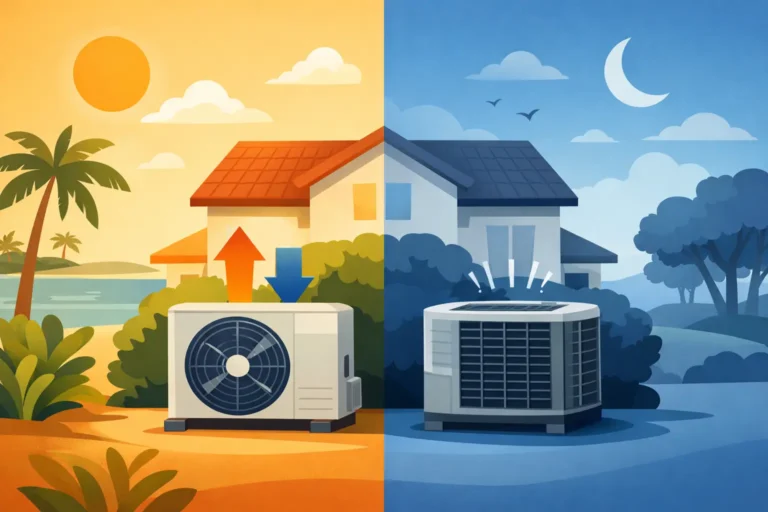

A Florida HVAC replacement decision often happens when the AC quits during a humid July afternoon. At that point, homeowners comparing heat pump vs ac florida options want a clear answer: will a heat pump cool the house just as well, and is it worth the added cost? For many Tampa Bay homes, it can be an excellent fit. But the right choice depends on your existing equipment, heating needs, ductwork, and the quality of the installation.
Heat Pump vs AC in Florida: The Core Difference
A conventional central air conditioner moves heat out of your home during cooling season. When temperatures dip, it does not provide heat, so the system relies on a separate furnace or electric heat strips in the air handler.
A heat pump uses the same refrigeration process to cool your home, but it can reverse that process for heating. In summer, it moves indoor heat outside. In winter, it gathers heat from the outdoor air and transfers it indoors. Even cool Florida air contains usable heat, which is why heat pumps work well through much of our climate.
For cooling, a properly selected heat pump and a comparable air conditioner can deliver very similar comfort. Both use an outdoor condenser, indoor coil or air handler, refrigerant lines, ductwork, and a thermostat. The real difference shows up during the heating season and in the equipment configuration your home needs.
Why Heat Pumps Often Make Sense in Tampa Bay
Florida does not have the long, severe winters found farther north. We do get chilly nights, occasional cold fronts, and short cold snaps, but most homeowners need dependable heating for weeks or months rather than an entire season. That makes a heat pump a practical all-electric option.
Because a heat pump transfers heat instead of creating it solely through electric resistance, it can use less electricity than heat strips alone during moderate weather. This can lower heating costs, especially for homeowners replacing an older straight-cool system with electric heat.
A heat pump also gives you one coordinated system for year-round comfort. There is no gas furnace to maintain, no combustion process, and no separate heating appliance to replace later. For homes with an electric air handler, upgrading to a heat pump is often a natural path when the cooling system reaches the end of its useful life.
That said, a heat pump is not automatically the best answer for every property. If a home already has a well-maintained gas furnace and only the outdoor AC unit needs replacement, a straight-cool air conditioner may be the more sensible and cost-effective choice. The best recommendation begins with an inspection, not a one-size-fits-all sales pitch.
Does a Heat Pump Cool as Well as an Air Conditioner?
Yes. A heat pump in cooling mode operates much like an air conditioner. It removes heat from indoor air and sends it outdoors. If the system is properly sized, charged, installed, and maintained, it can keep your home cool through a Florida summer.
Cooling performance is not determined by the label on the outdoor unit alone. Oversized equipment may cool the thermostat area quickly but shut off before it removes enough moisture. Undersized equipment can run continuously on the hottest days without reaching the desired temperature. Either problem can leave a home feeling uncomfortable.
Humidity control matters as much as temperature in Pasco County and throughout the Tampa Bay area. A correctly sized system with the right airflow, properly sealed ducts, and an appropriately matched indoor air handler has a much better chance of controlling moisture. Variable-speed equipment can also run longer at lower capacity, which may improve comfort and dehumidification when conditions allow.
If your current home feels clammy even when the thermostat says 74 degrees, replacing the outdoor unit alone may not solve the issue. Duct leaks, poor insulation, oversized equipment, dirty coils, drainage concerns, and incorrect blower settings can all contribute. A thorough evaluation should look beyond the condenser.
Heating During Florida Cold Snaps
When outdoor temperatures fall, a heat pump has less available heat to collect. Modern systems are still effective in the temperatures Florida commonly experiences, but most heat-pump air handlers also include electric heat strips for supplemental or emergency heat.
During a brief freeze or defrost cycle, those heat strips may turn on to maintain indoor comfort. Electric resistance heat is dependable but generally costs more to operate than the heat pump itself. This is normal operation, not necessarily a sign that something is wrong.
A qualified installer should size the heat strips appropriately and verify that the thermostat is configured correctly. Oversized supplemental heat can increase electrical demand, while inadequate backup heat can leave the home uncomfortable during the coldest nights. The goal is dependable performance without unnecessary operating cost.
Comparing Upfront Cost and Long-Term Value
A heat pump can cost somewhat more upfront than a comparable straight-cool AC system because it includes the components and controls needed for reversing operation. The price difference varies by system efficiency, size, electrical requirements, indoor equipment, duct modifications, and installation complexity.
The long-term value depends on what the new equipment replaces. A homeowner moving from straight cool with electric heat strips may see meaningful heating-efficiency benefits with a heat pump. A homeowner with an existing gas furnace may need to compare fuel costs, furnace age, and whether keeping a dual-fuel setup makes sense.
Efficiency ratings also matter, but they should be viewed in context. Higher SEER2 ratings indicate greater cooling efficiency, while HSPF2 helps compare heat-pump heating efficiency. A high-efficiency system can be a strong investment, yet it will not perform as intended if it is installed on restrictive, leaking, or poorly designed ductwork.
It is also worth considering repair history. If an older system has frequent refrigerant leaks, coil problems, compressor issues, or major electrical failures, repeated repairs may no longer protect your budget. Replacement should be based on the equipment’s condition and repair cost, not just its age.
Installation Quality Decides More Than the Equipment Type
Two homes can install the same model heat pump and have very different results. Proper installation includes calculating the home’s cooling and heating load, confirming the equipment match, checking refrigerant line sizing, setting airflow, verifying electrical connections, testing drainage, and commissioning the system after startup.
Ductwork deserves equal attention. Leaky ducts can pull hot, humid attic air into the system or lose conditioned air before it reaches the rooms that need it. Restricted ducts can create poor airflow, frozen coils, uneven temperatures, and unnecessary strain on the equipment. In some homes, duct sealing, repair, or redesign delivers as much comfort improvement as the new HVAC unit.
This is why Air Hawk Heating and Cooling approaches replacement recommendations as a whole-home comfort decision. The equipment matters, but so do the conditions it will operate in every day.
When a Straight-Cool AC May Be the Better Choice
A conventional AC system can still be the right solution when it matches the home’s existing heating arrangement and budget. If you have a newer gas furnace that is in good condition, pairing it with a compatible straight-cool condenser may avoid replacing equipment that still has useful life.
Straight-cool systems can also be a practical choice for certain light-commercial spaces, depending on occupancy, operating hours, and heating demand. The decision should account for the complete system rather than comparing outdoor units in isolation.
Homeowners who rarely use heat may also prioritize cooling efficiency, humidity control, warranty coverage, and installation quality over heating capability. In those situations, a high-quality AC system can provide reliable summer comfort without paying for features that may not deliver enough value for the household.
Questions to Ask Before You Choose
Before approving a proposal, ask whether the contractor performed a load calculation, inspected the duct system, and evaluated your indoor air handler or furnace. Ask how the proposed system will manage humidity, what backup heat it includes, and whether the quoted efficiency ratings apply to the complete matched system.
You should also ask what is included in the installation scope. Electrical upgrades, drain-line improvements, thermostat replacement, duct repairs, permits, startup testing, and warranty registration can affect both the final price and the system’s performance. Clear answers now prevent unwelcome surprises later.
The best choice is the one that fits your home rather than the one with the most features on a brochure. A careful evaluation can help you select equipment that keeps your family cool through the longest Florida summers, comfortable on cool winter mornings, and confident in the investment for years ahead.